The author of this book and I were born in the 1950s and both of us graduated from Don Bosco High and Technical School in Liluah (a suburb of Calcutta), run by the Salesian order of priests. We lived in the same Railway Colony built by the Eastern Railway to house their staff. Devarajan’s spacious house became the default place to meet up for the small circle of close friends in our class. We always remember Dev’s fondness for the Bollywood movies starring Rajesh Khanna and Sharmila Tagore – he would make it a point to see those movies, generally immediately after their release.
Our class appeared for the Indian School Certificate Exams (also known as the Senior Cambridge certificate) in December 1971 and by the middle of 1972 our paths began to diverge as some pursued engineering, others enrolled for Bachelor of Arts/Commerce/Science courses and some even started working! Devarajan succeeded in getting admission into the Indian Institute of Technology at Kharagpur. And that is when I lost touch with him.
Fast forward 40 years to 2012. Thanks to Facebook we reconnected and I went to see him and his lovely wife Kala in their home in Whitefield, Bangalore. During that brief meeting it was as if the years had melted away and we reminisced and laughed at the old memories. I got a brief idea of the course of his professional life since he graduated from IIT but the details were sketchy as we were more focused on recalling the good old days in school.
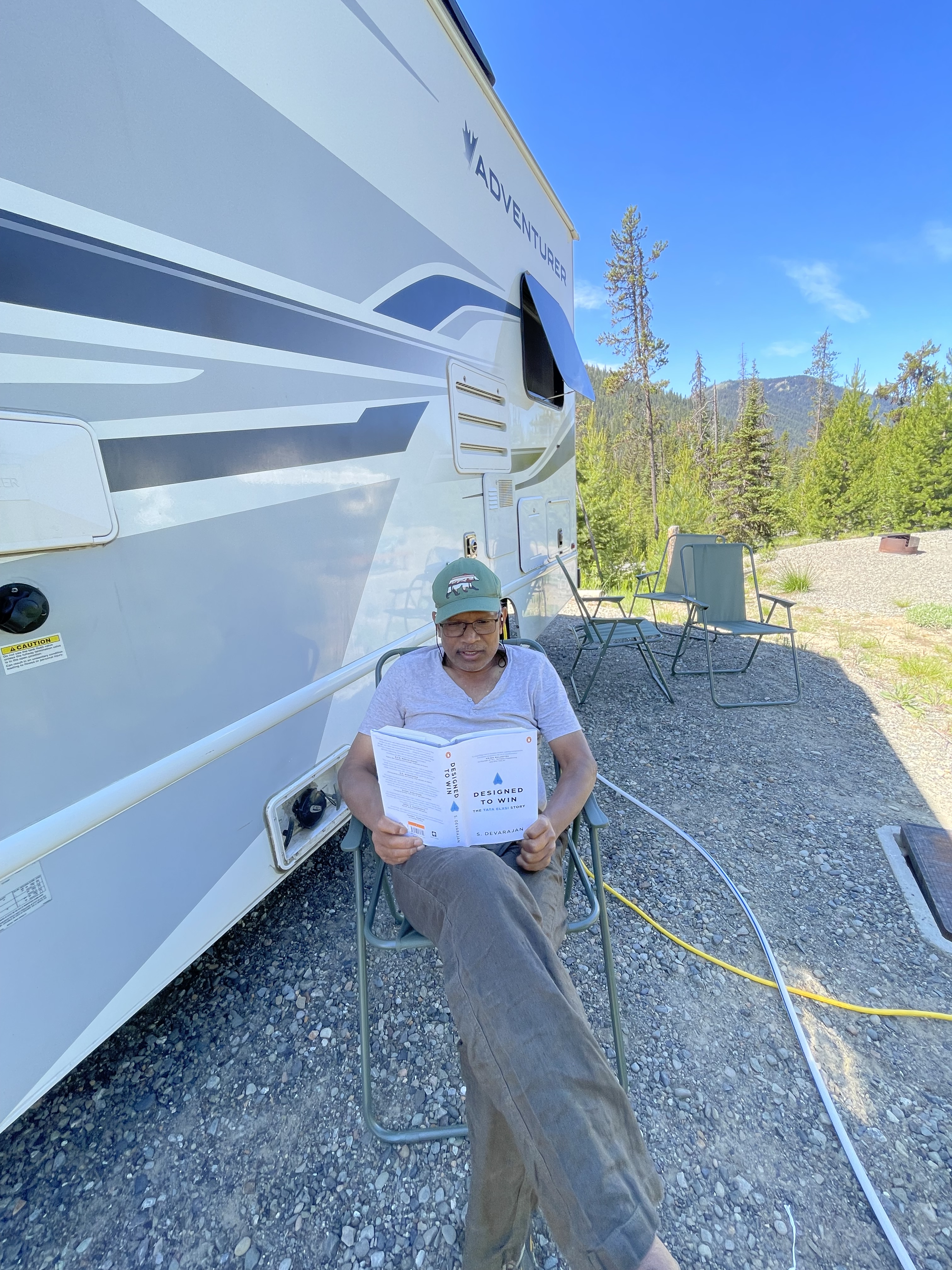
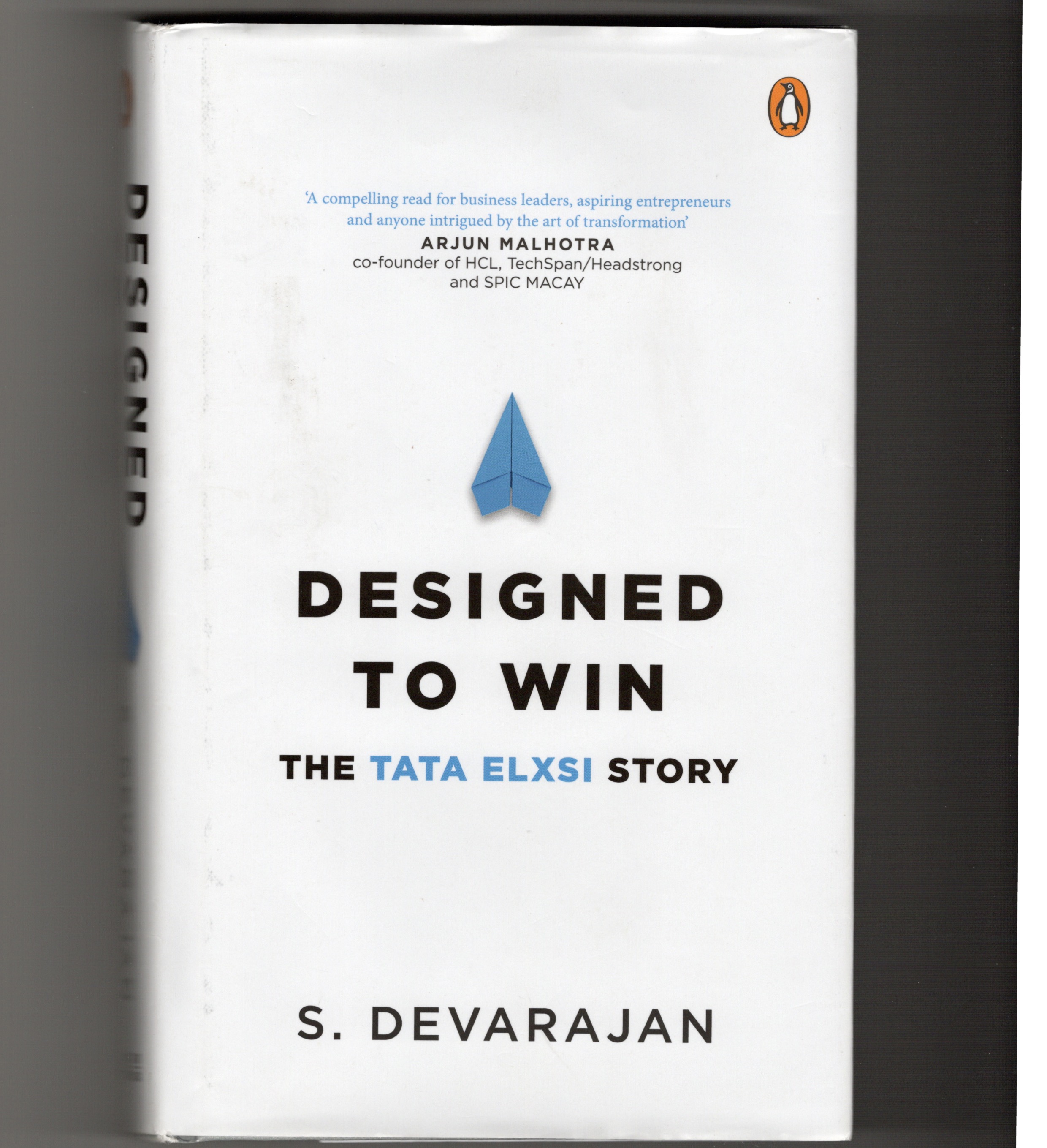
When my wife Margaret picked up a copy of “Designed to Win – The Tata Elxsi Story” at its Bangalore launch in November 2025, I was eager to start reading it. The reason I highlighted the era of the 1950s and the 1960s at the beginning of this review is that I wish to emphasize that someone like Devarajan from that period ended up heading one of India’s top applied computer tech companies and was instrumental in introducing cutting edge design solutions to a range of industries including automotive, VFX, aerospace and biochemicals.
Devarajan has meticulously chronicled the transformation of Tata Elxsi from the time that he joined them in May 1993 as “general manager – sales and marketing” up to the time that he decided to call it a day eight years later. During those eight years he also rose to become CEO of the company.
I will not go into the details of how he transformed the company from a loss-making unit within the prestigious Tata Group into one of its brightest gems. To appreciate that journey fully, you need to read the book and see it through Dev’s eyes.
What I personally found fascinating are the little anecdotes that the book is peppered with – like his meeting the formidable then Prime Minister Indira Gandhi when she came for the convocation ceremony at IIT Kharagpur, meeting Mother Teresa, the legendary Bollywood music director R.D.Burman, the time that he visits the McDonnel Douglas aircraft plant in California, his crossing the Tungabhadra river in a coracle, etc.
Dev’s narrative is quite straightforward, and he also takes the time to explain in detail exactly how Tata Elxsi was transforming the niche market that it was catering to. Even if like me you have no engineering background and are not a computer geek, his story is easy to follow. When the tech stuff becomes a little daunting for the average Joe, Dev takes the time to explain the nuts and bolts of the complex systems that they were working with. Names of path breaking companies like Silicon Graphics that most of us have just heard of as consumers who have devoured their work in the form of movies keep popping up in Dev’s narrative. He gives you a close and inside look at the collaborative technologies and synergies that were shaping the world of animation, special effects, design tools, CAD/CAM processes etc.
Though the main theme of the book is Tata Elxsi, it is a great testament and witness to the changing business and economic scenarios that were transforming the Indian economy in the 1990s.
I read it as an autobiography of a close friend with whom we shared teenage jokes more than fifty years ago. It comes across as a great personal journey told with honesty, humility and grace. He emphasises his gratitude to his mentors and colleagues, his bosses and his subordinates, above all to his dearest friends and of course his wife Kala and even his son Arjun.
The book has been published by Penguin Random House India. http://www.penguin.co.in


